

On the 2026 International Day of Women and Girls in Science, celebrated under the theme “From Vision to Impact: Redefining STEM by Closing the Gender Gap,” the European Union-funded project “Sustainable Energy Connectivity in Central Asia (SECCA)” is pleased to announce publication of its latest report
This study provides an in-depth look at present gender considerations in national energy and green transition policies, access to electricity and clean fuels, girls’ education in science, technology, engineering and mathematics (STEM), and women’s employment in the energy sector across Kazakhstan, Kyrgyzstan, Tajikistan, Turkmenistan, and Uzbekistan.
This report builds on five national gender assessments conducted in 2024 and, despite national specificities, reveals several common features and trends:
- Gender-disaggregated data in the energy sector remain largely unavailable, making it difficult to track inequalities and progress effectively and comprehensively.
- In the energy policy field, references to gender equality and/or social inclusion remain limited. While the Ministries of Energy in Kyrgyzstan and Uzbekistan have recently established a Gender Committee and a Gender Council respectively, very little information is available on their actual scope of work and impacts to date.
- The countries in the region have generally achieved widespread electrification. However, reliable and affordable energy access, especially in rural areas, remains uneven. In this regard, due to the nature of the roles and tasks that they are socially expected to perform, women generally remain particularly impacted by the constraints and challenges posed by insufficient and unreliable energy access.
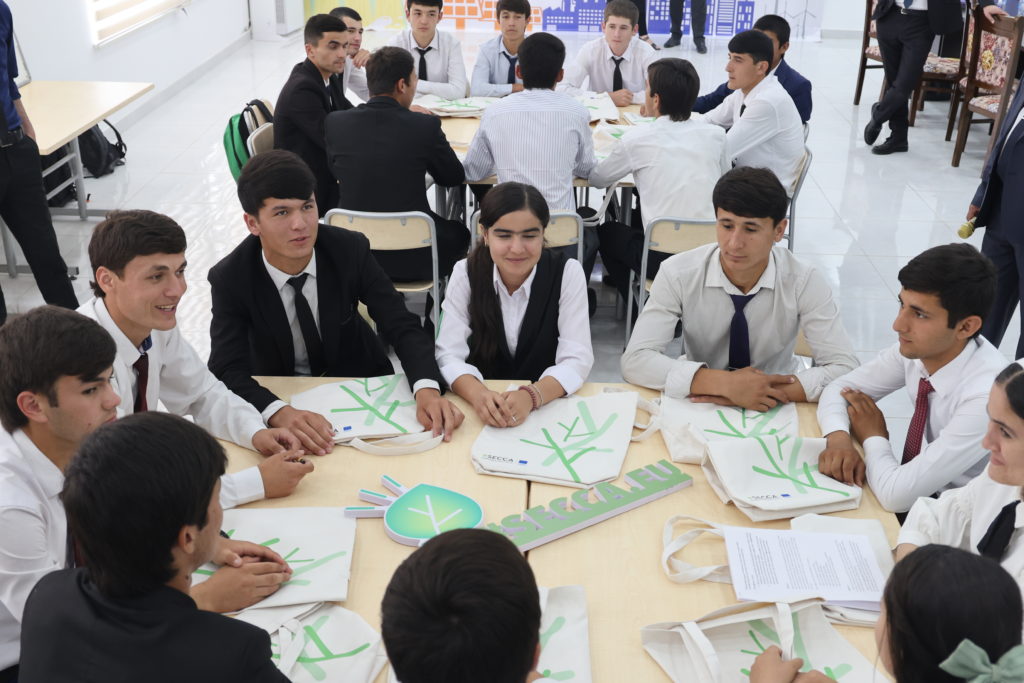
- The share of girls in STEM-related studies is still lower than that of boys. Current estimates from Kazakhstan indicate that, at best, girls account for 45% of STEM graduates. In Uzbekistan, the share of girls in STEM is increasing promisingly.
- Women are underrepresented in the energy sector and on average account for only around 16% of the workforce in the industry regionally. In the renewables sector, women’s employment is estimated to be higher than in the traditional energy sector in Kyrgyzstan, Tajikistan and Uzbekistan. On the other hand, in Kazakhstan, renewable energies are estimated to employ fewer women compared to the traditional energy sector, whereas no notable difference was identified in Turkmenistan.
- Persisting institutional and cultural barriers and stereotypes continue to limit girls’ awareness about and interest in education and careers in STEM and energy sectors. This also hinders women’s access to, retention and progression within the energy sector workforce, with potential negative repercussions on the viability and sustainability of the energy transition.
At the same time, by combining regional analysis with country-specific insights, the report identifies promising practices and entry points for strengthening gender-responsive energy policies and programmes. Examples of such practices include establishing gender councils and boards, adopting gender equality roadmaps, targets, and principles, implementing STEM for Girls initiatives, dedicated MBA, mentoring and scholarship programmes for women in energy. If effectively applied and scaled up regionally, these initiatives have the potential to make the energy sector significantly more inclusive, just, and gender-equal.
The report findings underscore that a successful energy transition cannot be achieved without fully engaging the talents and perspectives of all members of society, including women. It calls for stronger institutional capacity and targeted measures to promote women’s equal participation in education, employment, and decision-making.
This report was prepared under coordination of SECCA gender specialist Silvia Sartori and national gender equality and social inclusion (GESI) analysts Raigul Bulekbayeva (Kazakhstan), Azhar Boobekova (Kyrgyzstan), Nasrullo Naimov (Tajikistan), Jemal Durdykova (Turkmenistan), and Iroda Chilek (Uzbekistan), and is dedicated to the memory of Raigul Bulekbayeva.